

Originally published September 2021. Updated November 2026.
Washing your car should keep it looking good. But done the wrong way, a wash can cause the very damage you’re trying to avoid: swirl marks, fine scratches, water spots and dull paint.
Most of this damage builds up slowly, one wash at a time, so it’s easy to overlook until the paint has lost its shine. By then, fixing it means professional paint correction, which costs far more than washing the right way from the start. Here are the seven most common car wash mistakes, and what to do instead.
1. Using automatic brush car washes
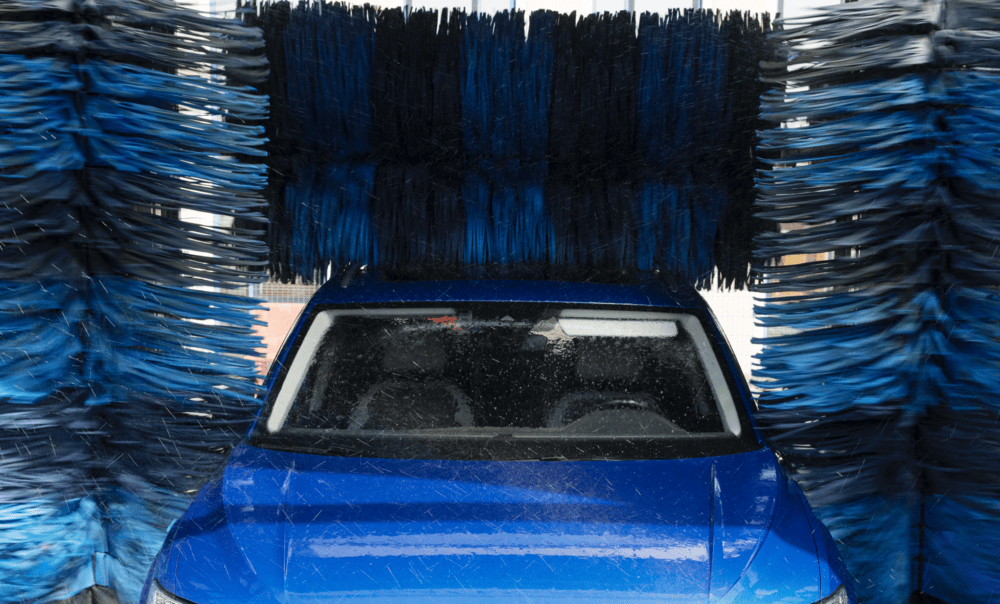
They’re quick and convenient, but the spinning brushes and cloth strips touch hundreds of cars. They can trap grit from earlier vehicles and drag it across your paint. Over time, that leaves swirl marks and fine scratches that dull the clear coat.
Touchless automatic washes avoid the brushes, but to clean without contact, they often rely on stronger chemicals. These can wear down wax, sealants and coatings faster than a gentle hand wash.
Do this instead: hand wash whenever you can. If you must use an automatic wash, choose a touchless one, and give your car a proper hand wash and top-up afterwards.
2. Washing in direct sunlight
On a hot day, water and shampoo dry on the paint before you can rinse them off. That leaves mineral deposits and shampoo residue that become water spots. Left too long, they can etch into the clear coat.
Do this instead: wash in the shade, early in the morning or in the evening, when the panels are cool to the touch. Work one section at a time, and keep the surface wet until you rinse. If spots do form, remove them quickly with a light water spot remover such as Ecoclean AIO Spray!
3. Using dish soap or household detergents
Dish soap and laundry detergents are made to cut through grease, so they also strip away the wax and sealants protecting your paint. They don’t provide the lubrication a car shampoo does, and they can dry out rubber seals and plastic trim.
Do this instead: use a dedicated car shampoo. Look for one that is:
- pH-balanced, for regular washing
- Coating-safe, so it won’t weaken a ceramic coating or sealant
- Slick, with enough lubrication for the mitt to glide without scratching
- Concentrated, so you’re paying for product, not water
Ecoclean Blizzard and Ecoclean Wash are both designed for coated and uncoated cars.
4. Washing with one bucket
With a single bucket, your mitt goes back into the same water after every panel, picking up the dirt it just removed. You then rub that grit straight back into the paint.
Do this instead: use the two bucket wash method: one bucket of shampoo and one of clean water, so you can rinse the mitt before reloading it.
5. Skipping the pre-rinse
Going straight in with a mitt means it meets the heaviest layer of dirt and sand. That’s when the most scratching happens.
Do this instead: rinse the car thoroughly first. For even better protection, pre-wash with snow foam to soften and lift dirt before you touch the paint.
6. Washing the wheels last, or with the same mitt
Wheels collect brake dust and heavy road grime. Wash them last, and dirty water splashes onto your clean paint. Use the same mitt, and that abrasive grime ends up on your bodywork.
Do this instead: clean the wheels first, with separate brushes, a separate mitt and ideally a separate bucket.
7. Drying the wrong way, or not at all
Leaving the car to air-dry, especially in the sun, leaves water spots behind. Old towels, rags and chamois can also be rough on paint.
Do this instead: dry straight after the final rinse with clean, plush microfiber towels, or use a blower. A drying aid such as Ecoshine Enhancer helps the towel glide and adds gloss. Don’t forget the door, boot and bonnet jambs, where water collects and drips out later.
The right way to wash your car, in short
- Park in the shade, with cool panels.
- Clean the wheels first, with separate tools.
- Rinse the car, then pre-wash with snow foam.
- Hand wash from the top down using two buckets.
- Rinse thoroughly.
- Dry straight away with microfiber towels.
For the full method, read our step-by-step two bucket wash guide.
Washing a ceramic-coated car?
A ceramic coating makes washing easier, but it doesn’t make your car scratch-proof. Avoid brush car washes, use a coating-safe shampoo, and wash every one to two weeks. If your coating seems to have lost its beading, it may just need a clean and top-up. Here are the signs your ceramic coating is wearing off.
FAQs:
Are automatic car washes bad for your paint? Brush car washes can cause swirl marks and fine scratches, because the brushes can trap grit from earlier cars. Touchless washes avoid the brushes, but often use stronger chemicals that wear down protection faster. A hand wash is the safest option.
Is a touchless car wash safe for a ceramic coating? It’s gentler than a brush wash, but the stronger chemicals some touchless washes use can wear a coating faster. Hand washing with a coating-safe shampoo is best.
Can I wash my car with dish soap? It isn’t recommended. Dish soap is made to cut grease, so it strips wax and sealants, and it doesn’t give the lubrication a car shampoo provides.
What is the best time of day to wash a car? Early morning or evening, or anywhere in the shade, when the paint is cool. This stops water and shampoo from drying on the surface.
Is it okay to let my car air-dry? No. As the water evaporates, it leaves minerals behind that cause water spots. Dry the car straight away with clean microfiber towels or a blower.
How often should I wash my car? Every one to two weeks for most cars. Wash sooner if it’s covered in bird droppings, tree sap or salt, which can damage paint if left.
